Specialized web shop for swimming pools, hot tubs and saunas
07. October 2025.
How does a solar shower work?
At the heart of the system is a tank that absorbs the sun's heat and transfers it to the water. The dark-colored cylinder or monolithic column is often made of UV-resistant material to heat the water faster. The water enters from a garden hose, is heated in the tank, and the outlet temperature is adjusted via a mixer. Most models have an overhead shower head, and many also offer an additional tap for rinsing feet.
Materials and durability
The first filter when choosing is the housing material:
- Stainless steel: a robust and aesthetically refined option, ideal for coastal areas with high humidity and salt. It is resistant to corrosion and scratches and withstands temperature changes well.
- PVC/PEHD or composites: lighter, more affordable and faster to install. Quality models have UV-stabilized surfaces that prevent fading and deformation.
- Aluminum: a good compromise between weight and durability; look for anodized finishes for better resistance.
In practice, smooth surfaces are found to be easier to clean than scale and salt, and monobloc designs have fewer joints where leaks could occur. Experts with long experience in the design and installation of swimming pools, such as the domestic industry gathers, often recommend materials according to the microclimate of the location, sun exposure and yard design.
Tank capacity and water temperature
Capacity affects comfort and the number of consecutive showers:
- Smaller tanks (20–30 l) are sufficient for occasional use or a small number of users.
- Medium tanks (35–45 l) offer a good balance between volume and water heating speed, for example a 40 l solar shower.
- Larger tanks (50–70 l and more) are suitable for families or facilities with frequent use.
On a sunny day, the water in a quality tank can reach 30–45 °C, depending on the position, color of the casing, and the intensity of insolation. If you want warmer water in transitional periods, choose models with better thermal insulation or additional solar surfaces.
Functionality and model selection
Basic models offer a shower head and mixer, while more advanced models provide:
- foot wash faucet
- side sprayers
- integrated thermometer for temperature control
- flow regulator to save water
- quick-release fittings and rotating rose
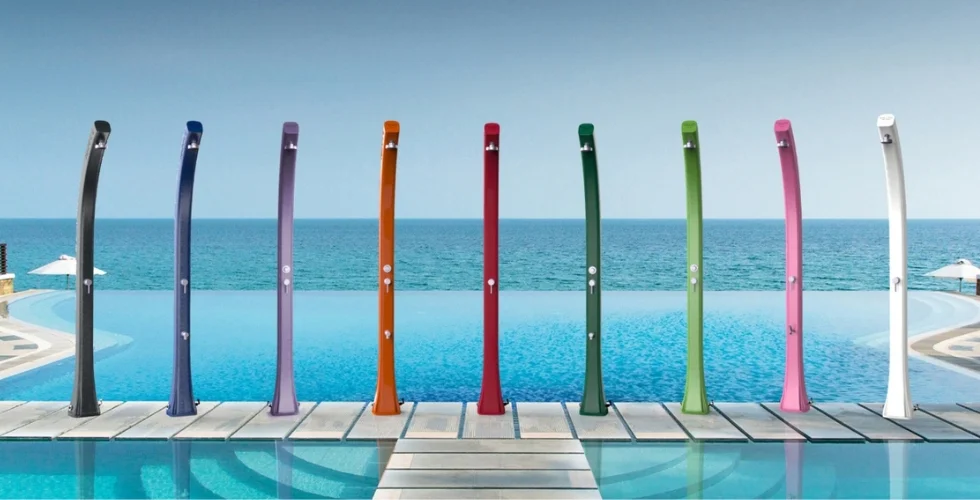
When choosing, consider the style of the space. A minimalist model in matte black or anthracite fits in with contemporary terraces, such as the Happy XL anthracite or the Jolly anthracite, while stainless steel adds a luxurious feel to stone or wood cladding. If you have children, high-mounted shower heads with wide spray and non-slip surfaces are practical.
 Installation: position, base and connections
Three points are crucial for reliable operation:
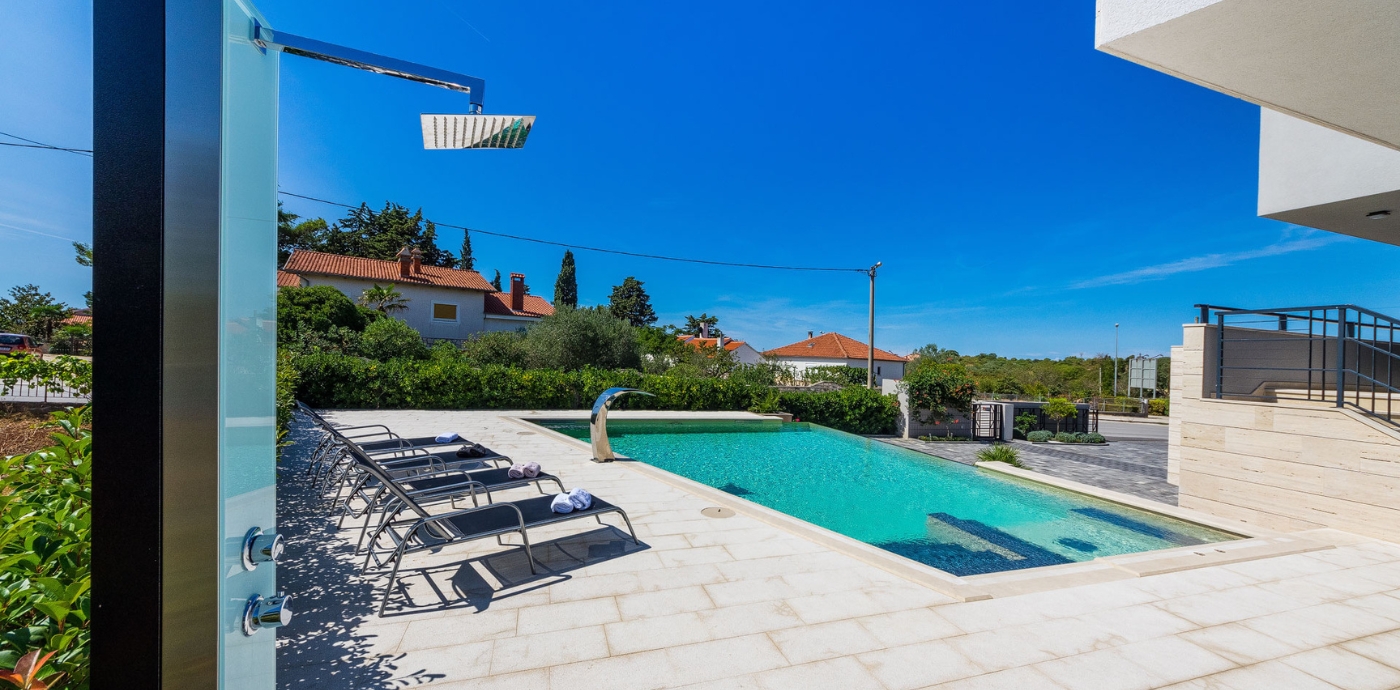
- Position: Place the shower in a location with maximum sun exposure and minimal shading. A south or southwest orientation often gives the best results.
- Substrate: Ensure a stable, level and solid base (concrete, flagstone or quality composite decking). Most solar showers are anchored with bolts through the base – proper fastening prevents swaying in the wind.
- Connections: The supply is usually handled by a standard garden hose with a quick-connect fitting. Provide a drain or drainage layer so that water does not accumulate around the base. Plan a simple procedure for draining the tank for the winter.
Solar showers work without an electrical connection. If you have a shaded plot, there are hybrid variants with an auxiliary heater, but they lose the advantage of being fully solar-powered and increase the cost.
Maintenance and longevity
Proper care extends the life of your equipment:
- After the season, flush the system and empty the tank to prevent freezing.
- In hard water areas, periodically descale the rose and mixer with a mild detergent.
- Check seals and joints; replacement is easy and inexpensive.
- Where possible, use an inlet filter to reduce particles and sediment.
Regularly showering swimmers before entering the pool reduces the ingress of sunscreen, sweat, and dust, which facilitates chemical balance and relieves the strain on filters. Pool companies specializing in pools, such as those that provide self-maintenance education in addition to construction, often point out that a solar shower is one of the most cost-effective upgrades for a cleaner pool environment.
Cost and total value
The price is affected by the material, capacity, additional functions and design. Stainless steel and a larger tank increase the price, but they also bring greater durability and better comfort. Also include the installation elements (anchoring, base, hoses) and any decorative work around the base. When you compare the investment with the energy savings and lower load on pool chemicals, a solar shower is a valuable solution in the long term.
Alignment with the needs of the space and users
Assess how often the pool is used and who the typical users are. For apartment buildings with higher user traffic, choose larger capacities and robust materials. In family homes, ergonomics, easy installation and placement near the pool entrance are more important. If the garden is exposed to bora or frequent gusts of wind, a solid anchorage and an aerodynamic shape are a priority. Aesthetic compatibility with the fence, terrace and surrounding materials helps the purchase of a solar shower fit harmoniously and functionally, while retaining all the benefits of natural heating under the sun.
Read more and…