Specialized web shop for swimming pools, hot tubs and saunas
27. August 2025.
When to start with preparing
The start of winter preparation is planned when the water temperature stabilizes around 12-15 °C. Then the growth of algae naturally slows down, and chemical stability is easier to maintain. In coastal areas, the pool is often left in the "winter" operating mode with reduced pump and filter operation, while in continental areas it is necessary to carry out a complete winterization procedure due to freezing.
Thorough cleaning and balancing of water
Cleaning is the first step. Remove leaves, sediment and deposits from the bottom and walls, clean the skimmer baskets and pump pre-filter, and thoroughly clean the edge lines. Automated robotic cleaners speed up the work considerably and contribute to a uniform result.
Then balance the water:
- Aim for pH around 7.2–7.4
- Keep total alkalinity in the mid-range
- Adjust calcium hardness to reduce risk of scale or corrosion
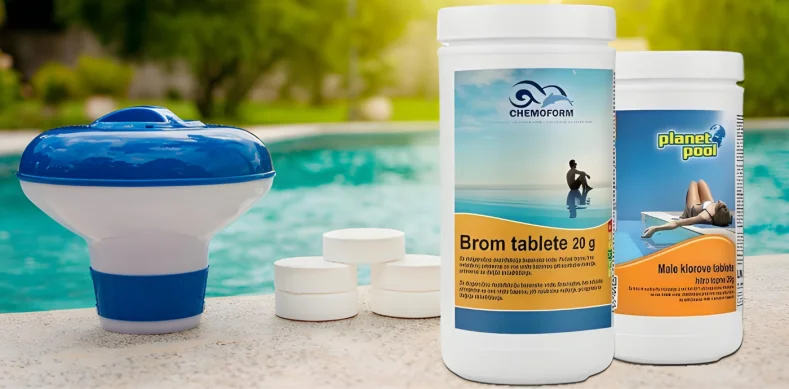
- Shock chlorinate before closing and add slow-release algaecide if necessary
Once the chemistry is stable, filter for a few hours to evenly distribute the agents.
Water level and filtration system
The water level in winter depends on the type of pool and cover. General guidelines:
- Lower the water level a few inches below the skimmer opening or according to the instructions for your cover.
- Perform a final filter backwash and drain the water from the filter body, heater, and pump by removing the bottom plugs.
- Clean and store the filter cartridge if you have one; leave the sand filter dry and open over the winter.
If you have automatic dosing equipment, flush the pipes with clean water and temporarily turn it off. Rinse the salt chlorinator and store it in a dry place.
Pipeline and equipment protection
Water left in pipes at sub-zero temperatures expands and can cause cracks. Proceed as follows:
- Blow water out of the return and suction lines using a low-pressure compressor or a dedicated blower until air comes out of the outlets.
- Pour non-toxic, propylene glycol-based pool antifreeze (never automotive grade) into the pipes.
- Install an expansion protection (so-called “gizmo”) or float tank in the skimmer to absorb ice pressure.
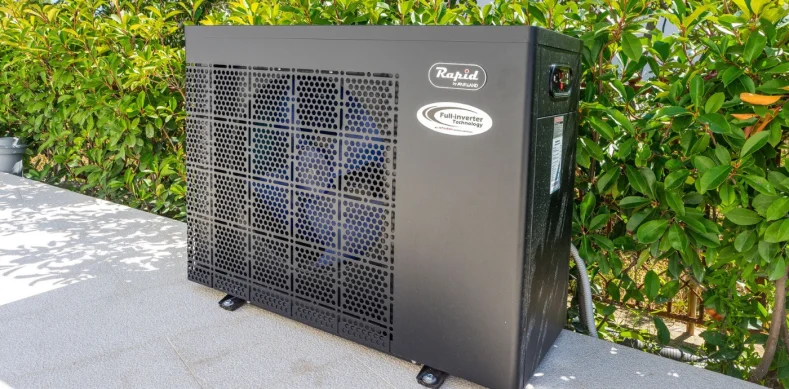
- Protect the pump, heater, and automation from moisture; keep electrical control cabinets dry and cover external connections.
Surface covering and protection
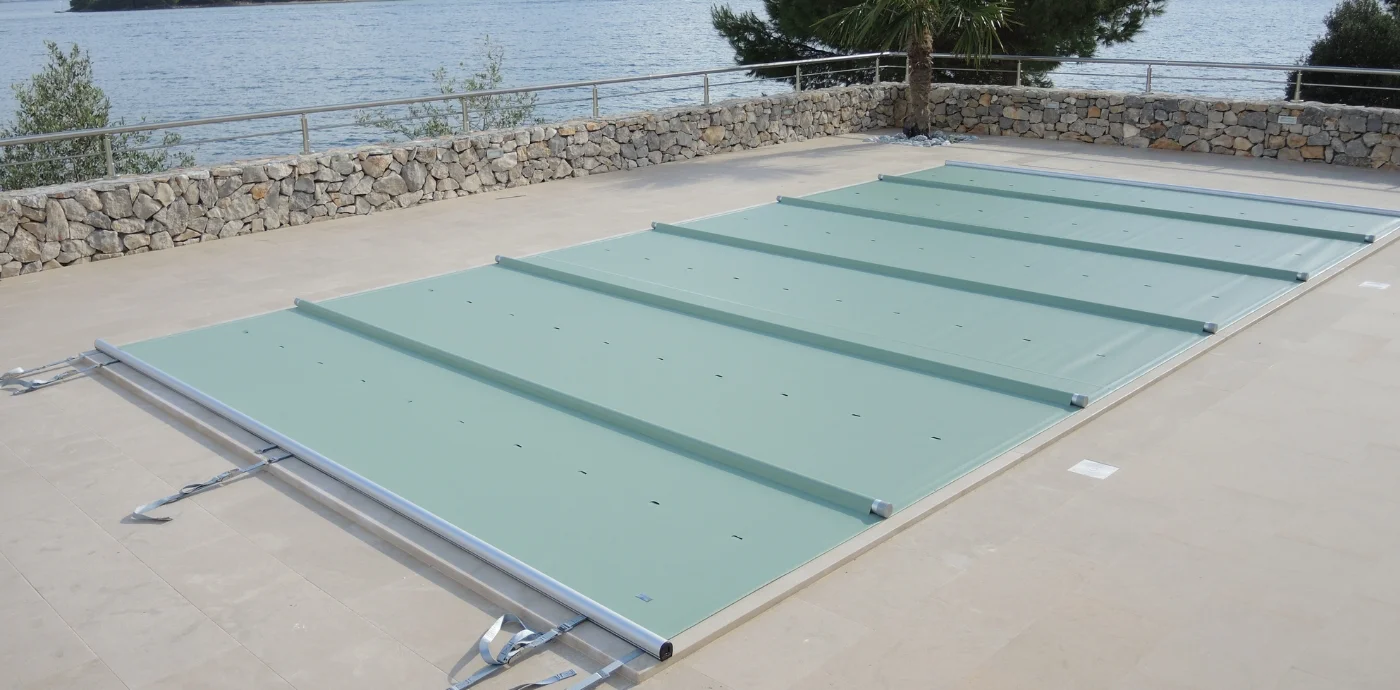
A quality cover protects against dirt, UV radiation and precipitation and helps maintain chemical stability.
- Mesh covers allow rainwater to pass through but retain large particles; they are suitable for areas with high rainfall.
- Solid covers provide better protection from light and evaporation, with more frequent pumping of accumulated rainwater.
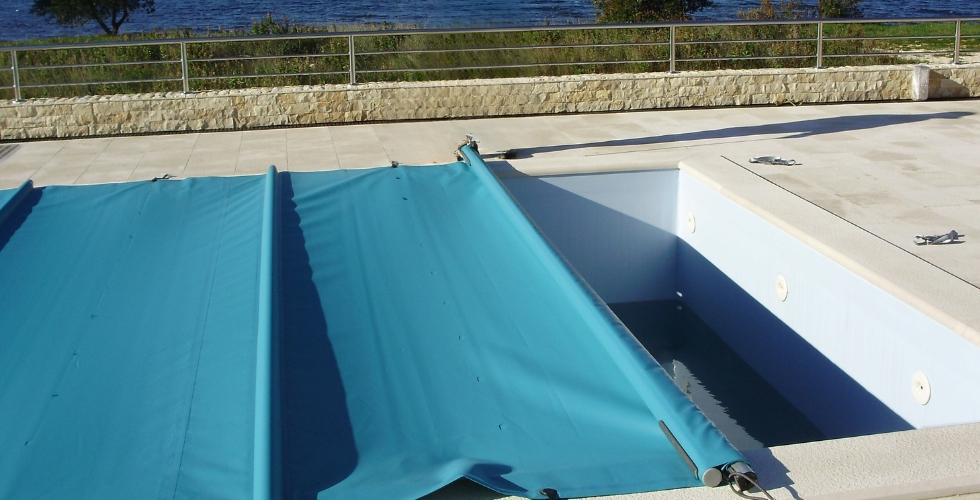
- Tension the cover evenly, use anchors and straps of the prescribed length and additional equpment, and remove leaves regularly to prevent the weight from deforming the edges.
For above-ground pools, it is useful to place floating shock absorbers or an air cushion under the cover so that the ice breaks in a controlled manner towards the middle.
Control during the winter months
I kada je bazen zatvoren, povremena kontrola sprječava iznenađenja:
- Check the water level once a month and remove excess rainwater from the cover.
- Inspect the tightness of the straps and anchors and the seals on the openings.
- If the winter lasts a long time and the temperature fluctuates, periodically measure the pH and add winter conditioner or algaecide through the opening in the cover as needed.
- After heavy storms, remove organic impurities quickly so that they do not decompose in the water.
Coast and continent: what is the difference?
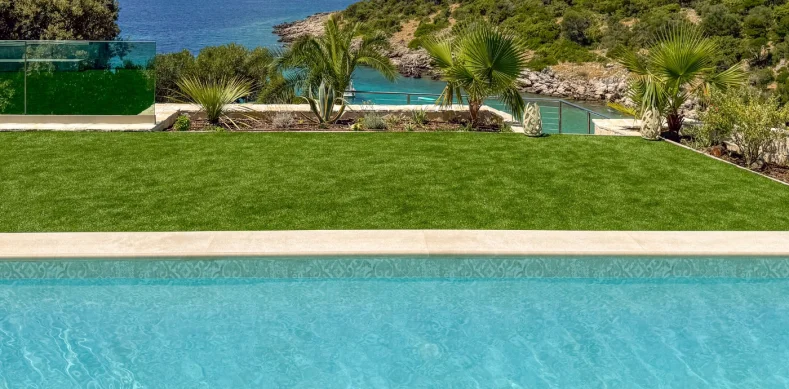
Coastal: Freezing is short-lived or infrequent. The pool can remain filled to its normal level with reduced pump operation (e.g. a few hours a day) during the coldest periods. A cover is recommended to protect against rain, wind and sea salt in the air.
Continent: Freezing is regular. Do not empty the pool to the bottom as the water provides static support to the walls and prevents the pool from rising due to groundwater. Maintain a low but stable water level under the skimmer and protect the piping with antifreeze.
Safety and environment
Store chemicals dry, in their original packaging and out of reach of children. Never mix different oxidants and do not add water to the chemical – always chemical to water. When discharging excess water, follow local regulations and direct it in a way that does not endanger the garden, neighbours or the drainage system.
The most common errors that cause damage
- Starting the preparation too late, while the water is still warm, which encourages algae blooms.
- Unbalanced pH and hardness, so in the spring you are greeted with discolored walls and scale.
- Leaving a water column in the pipes without blowing them out and protecting them.
- Loosely installed cover that falls into the water and drags the anchors.
- Neglecting monthly inspections during the winter, which leads to flooding or cracking of the edge plates
Carefully implemented steps – from cleaning and balancing the water, to lowering the level and protection systems, to regular winter checks – ensure that the pool, pump and filter welcome spring in excellent shape, ready for quick start-up without additional costs and unnecessary interventions.
Read more and…