Specialized web shop for swimming pools, hot tubs and saunas
20. October 2025.
Visual cleanliness and impeccable appearance
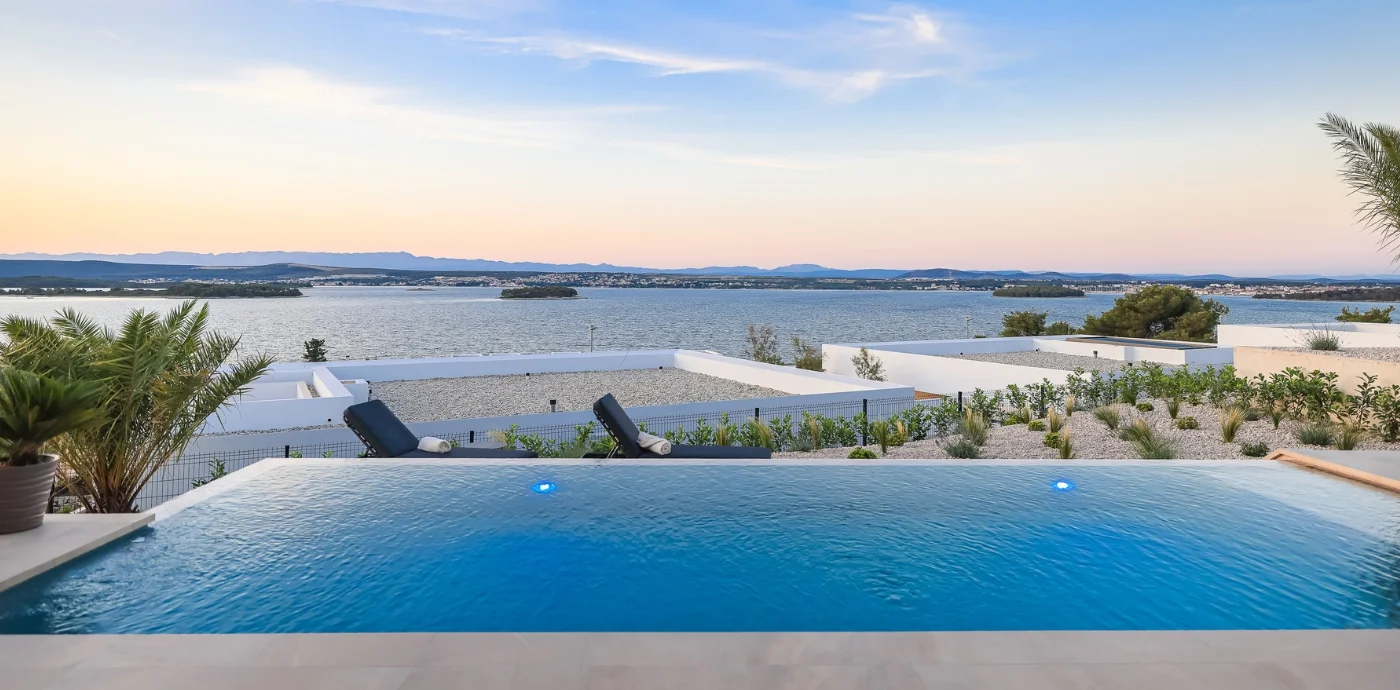
The most recognizable advantage is aesthetics. When the water level is level with the edge of the pool, the surface acts like a mirror, and the boundary between the water and the surrounding space almost disappears. Such a pool edge creates a luxurious, contemporary feel and a strong architectural accent. In a courtyard with a view, the infinity design opens up the horizon and makes the overflow pool visually “flow” into the landscape.
In addition to the appearance, the overflow reduces the formation of a visible dirty line on the walls because contaminants from the surface are immediately drained into the channel. The water remains crystal clear even during periods of intensive use.
More efficient filtration and water circulation
The overflow tank offers extremely even water circulation. Since the surface layer is constantly flowing into the channel, anything floating – pollen, dust, oils from the cream – is quickly removed. The water from the balance tank is then sent through the filters and evenly returned to the pool via the returns. The result is an efficient filtration system with fewer “dead zones” and a more stable chemical balance.
Difference from a skimmer pool
In the skimmer type, water enters the filtration through several rock assemblies. This is a proven solution, but it depends on wind direction and water level. The overflow system performs “skimming” around the entire perimeter, so the removal of impurities is more consistent. If top water quality and a calm, clear surface are the priorities, the overflow edge has a clear advantage.
Hygiene, safety and a more enjoyable swimming experience
A permanent overflow prevents the build-up of biofilm and grease marks at the waterline. Less need for manual cleaning means less contact with chemicals for users who maintain the pool themselves. In pools with a large number of bathers, the overflow channel absorbs waves and excess water, so the level stabilizes more quickly and the surface remains calmer. With anti-slip gratings around the channel and a properly designed pool edge, access is safe for both children and the elderly.
Flexible design and fitting into the space
Overflow pools are highly adaptable. A perimeter overflow follows the entire edge of the pool and creates a striking, minimalist frame, while a linear overflow can be directed towards the view. In compact backyards, an overflow visually increases the space because there is no visible difference between the water surface and the beach. In hillside gardens, an infinity edge dramatically emphasizes the landscape and turns the pool into a central motif.
Maintenance and costs throughout the life cycle
It is true that the overflow type usually requires a higher initial investment due to the construction details, balance tank and precise edge leveling. However, in practice, part of the investment is returned through simpler maintenance. Since the filtration is more intensive on the surface, "shock" doses of chemicals are less often required, and automated dosing stations and swimming pool cleaners make's it even easier to take care of cleanliness. With energy-efficient, variable pumps and smart work programs (eg night, reduced speeds), consumption can remain rational without compromising on water quality.
When to choose an overflow pool and when a skimmer pool
- Choose an overflow pool if you want a bold design, a perfectly smooth surface, the highest level of hygiene and consistent filtration in buildings with frequent use.
- Choose an overflow with an infinity edge if the yard has an attractive view or the pool is located on a gently sloping terrain.
- Choose a skimmer pool if the priority is a lower initial investment, easy installation and less construction work, with a good level of quality for private use with less load.
Key technical points to watch out for
- Balance tank: Correctly dimensioned according to the volume and expected number of bathers, it ensures stable operation of the overflow.
- Edge geometry: Perfect leveling and a properly shaped pool edge ensure an even film of water without interruption.
- Overflow channel and grates: Sufficient flow, anti-slip finish and easy cleaning extend the life and maintain safety.
- Hydraulics and returns: Properly arranged nozzles prevent blockages in the circulation and increase filtration efficiency.
- Automation: Level sensors, dosing stations and remote control facilitate maintenance and maintain water stability.
- Materials and finishes: High-quality linings and edge strips maintain the aesthetic effect in the long term and reduce the need for repairs.
An overflow pool combines high-end aesthetics with the functional benefits of professional filtration, especially when carefully designed according to the space and usage habits. For owners who value clear water, a quiet surface, and architectural harmony, this type of pool is a logical choice.
Read more and…